


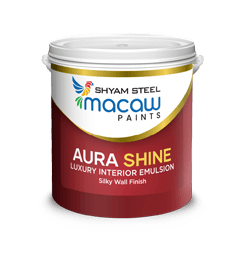
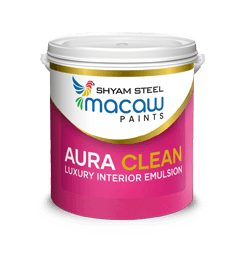
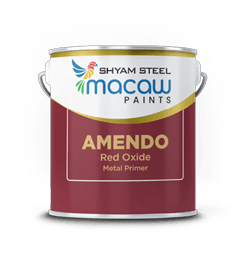
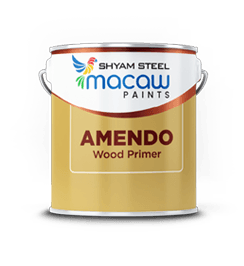
Most people spend weeks choosing an interior emulsion paint for their walls but seldom spend any time choosing the primer underneath it. We call it working backwards. The primer for emulsion paints decides how evenly your interior emulsion paint sits, how long it lasts, and whether that top coat will start flaking off or not. Picking the right primer for emulsion paint is a smaller decision on paper, but it's the one that determines whether the rest of the job holds up.
At Macaw Paints, from Shyam Steel Paints, we build our primers and emulsions as matched systems rather than standalone products.
Why a Primer Matters Before Emulsion Paint Goes On
Raw plaster and old cement surfaces are porous. If they are left untreated, they soak up paint unevenly. This results in the first coat of emulsion disappearing into the wall instead of sitting on top of it. A primer seals that porosity and gives the topcoat a uniform surface to bond to. Macaw's Dura Fill primers are built around exactly this job: they reduce surface porosity and improve adhesion and coverage for whatever emulsion goes on next. Skip this step, and you'll likely need an extra coat of emulsion just to get even coverage — which costs more than the primer would have.
Choosing a Primer for Interior Emulsion Paint
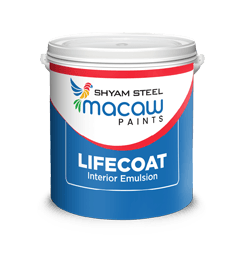
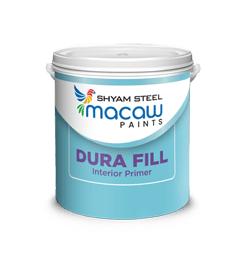
Regarding the interior walls, Macaw combines Dura Fill Interior Primer and LifeCoat Interior Emulsion as its undercoat and topcoat, respectively. The primer can cover 100 to 120 square feet per litre in one coat; it will be diluted with tap water up to 100 per cent in volume according to the substrate conditions, keeping a four-hour gap between coats. It can be applied using brush, roller, or spray techniques.
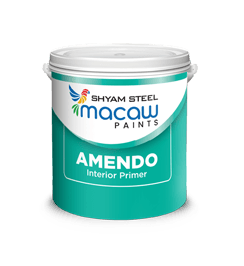
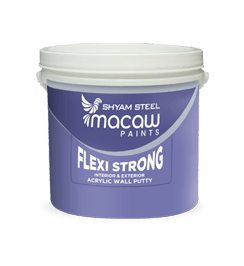
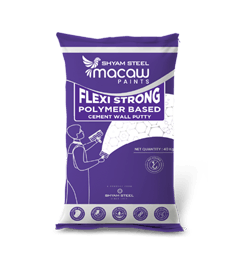
If you're going with a higher-end interior emulsion paint like Aura Shine or Aura Clean, Macaw's product literature recommends Amendo Interior Primer as the undercoat instead. This should be followed by Flexi Strong Acrylic Wall Putty to fill hairline cracks and even out the surface before the final primer coat and topcoat go on. That putty step isn't optional if your walls have any visible cracking. Skipping it simply means the crack will travel through the emulsion later.
Picking the Right Exterior Primer Paint
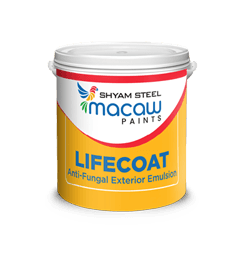
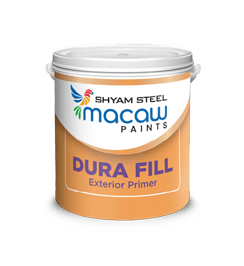
The exterior wall faces challenges such as rain, direct sun rays, and temperature variations, which do not affect the interior walls. Hence, the primer needs to be strong enough to handle these issues. Macaw's Dura Fill Exterior Primer has been specially designed for use in cementitious substrates and has the same coverage area just like the interior primer, ranging from 100-120 sq.ft per litre in one coat for four hours. However, it is suitable for LifeCoat Anti-Fungal Exterior Emulsion paint only.
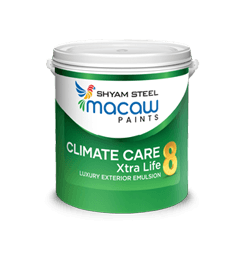
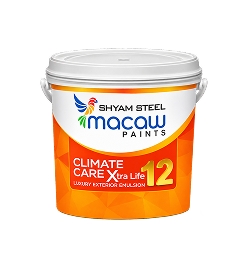
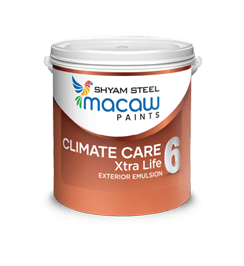
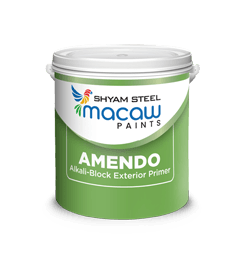
For Climate Care Xtra Life, Macaw's premium exterior emulsion that carries a 7-year performance warranty, the brand specifies Amendo Alkali-Block Exterior Primer as the undercoat. Alkali resistance matters here because fresh cement and plaster are highly alkaline, and a primer without that resistance can break down and cause the topcoat to blister.
Matching Primer to Emulsion: What to Check Before You Buy
A few conditions apply across both interior and exterior primers for emulsion paints, and getting them wrong is the most common reason a primer job fails before the emulsion even goes on:
- Wall moisture content should sit below 12% before priming
- Surface pH should fall between 7 and 11
- Dilution ratio should match what's printed on the specific primer's data sheet, not a generic rule of thumb.
- Full drying time (typically 4 hours for Dura Fill primers) should be respected before the next coat, regardless of how dry the wall looks.
- Loose particles, dust, and old flaking paint need to come off first — primer bonds to the surface, not through it
None of these are difficult to check. They're just easy to skip when a job is running behind schedule, and skipping them is where most premature paint failures start.
Why Shyam Steel Paints Builds Primers and Emulsions as a System
SSIL Paint Industries Pvt. Ltd., which manufactures under the Macaw Paints name, is certified to ISO 9001:2015 by SGS United Kingdom, with the certificate covering manufacturing and supply of decorative paints, protective coatings, and putty. The company runs its R&D and testing out of a facility in Howrah, West Bengal, and operates as part of the wider Shyam Steel Group. That backing is why the primer-emulsion pairings in this piece aren't arbitrary. They're specified by the manufacturer as tested combinations, not just "any primer will do."
Buying the primer and the emulsion from the same product line removes a lot of guesswork. You're not left wondering whether an unrelated brand's primer will play well with Macaw's topcoat chemistry, because the two were formulated to work together in the first place.
FAQs
Do I Really Need A Primer Before Applying Emulsion Paint?
Yes, in almost all cases. Without it, porous walls absorb paint unevenly, adhesion suffers, and you typically end up applying an extra coat of emulsion to compensate — which costs more than the primer would have.
Can I Use An Interior Primer On An Exterior Wall, Or Vice Versa?
No. Exterior primers like Dura Fill Exterior and Amendo Alkali-Block are formulated to handle weather exposure and alkaline cement surfaces that interior primers aren't built for. Using the wrong one shortens the life of the paint job.
How Long Should Primer Dry Before Applying Emulsion Paint Over It?
For Macaw's Dura Fill primers, the recommended drying window is four hours minimum between coats. Humid conditions can extend that, so it's worth checking the surface rather than just the clock.
Does Macaw Paints Specify A Dilution Ratio For Its Primers?
Yes. Dura Fill Interior and Exterior Primers can be diluted with potable water up to 100% by volume, depending on the surface and desired consistency, and applied by brush, roller, or spray.