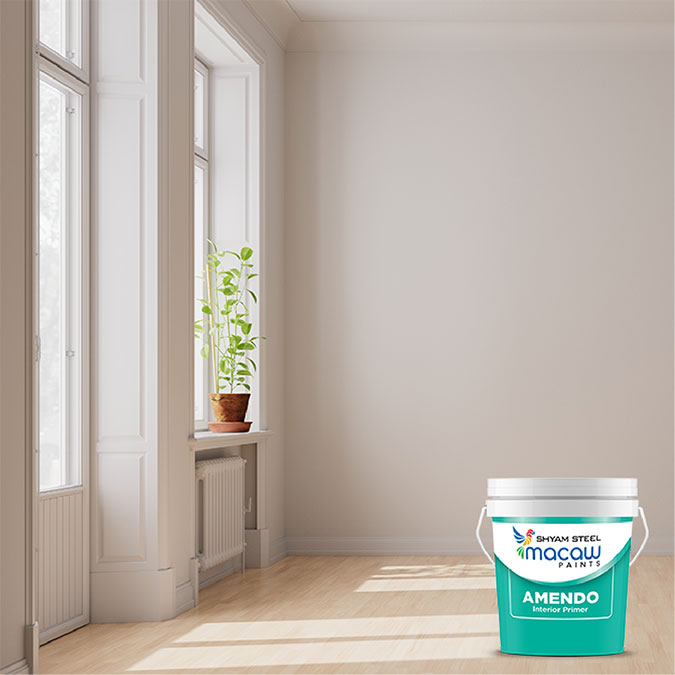
Amendo Interior Primer is a premium-quality product having better adhesion; effectively seals pores and provides a smooth non-absorbent surface. It improves the performance of topcoat
Low VOCPremium
Benefits
SEALS PORES AND BETTER ADHESION
It reduces porosity of the surface and provides better adhesion. It also enhances coverage for topcoat
ALKALI-RESISTAN
The primer has excellent alkali resistance power for application on the interior masonry surfaces
Before application ensure the surface is free from loose particles and dirt. Use suitable sandpaper to rub the surface
STEP 02
Wipe clean with dry cloth and ensure the surface is completely dry
STEP 03
Apply a coat of Amendo Interior Primer after diluting it to the standard dilution up to 100% by volume, and allow minimum 4 hours drying time
STEP 04
Apply another coat of primer after applying Flexi Strong Acrylic Wall Putty and allow sufficient drying time
STEP 05
Amendo Interior Primer can be applied by brush, roller or spray
Product FAQs
Frequently Asked Questions
The right interior wall primer fills porous pores, enhances paint adherence and ensures low VOC concentration for a healthier indoor environment. Built on these very guidelines, Amendo Interior Primer uses a unique alkali bloc primer formulation to reduce porosity and provide a stable footing for the topcoat of paint to cling to, while keeping it VOC-friendly and free of lead, mercury or chromium. As it is not subjected to extreme weather conditions like exterior walls, the importance given to resistance fades away, and instead, preference is focused on a smooth interior primer coating, low VOC rating and even spread. Not only does Shyam Steel Paints’ smart interior paint primer hide existing rough patches on the wall, but it also provides an even base for distempers or emulsions.
Yes, although we can be tempted to skip priming the walls during a smaller job inside. Priming an interior wall helps to close the pores of the surface so when you go for your finish layer you’ll apply more of your paint on the surface rather than into patchy plaster or paint. When it comes to using Amendo Interior Primer Alkali Bloc Primer for your interior walls, it not only seals those pores but it also will help block the alkali from new cement or plaster, reducing the risk of early staining and flaking reduced to nil. Many people end up needing another topcoat to completely mask colours, which in actual fact costs more than the Shyam Steel Paints' interior wall primer.
Alkali primer is used to counteract the natural alkalinity present in cement, plaster, and masonry surfaces before paint is applied. As these materials cure, they release alkaline salts that can react with ordinary paint, leading to blistering, staining, or premature failure of the finish. Amendo Interior Primer, an alkali bloc primer, forms a protective seal over the wall that neutralises this reaction while also improving how well subsequent coats of paint adhere. It's commonly used on newly plastered interior walls, since fresh plaster carries higher alkalinity during the curing period, as well as on older walls showing signs of salt patches or chalking. Using alkali primer also tends to result in a smoother, more even topcoat finish, since the primer reduces surface porosity that would otherwise cause inconsistent paint absorption across the wall.
Apply your interior paint primer to walls once they are washed, sanded, and entirely dry, but, crucially, just before you start your topcoat. That’s particularly vital on new plaster, which still needs to form and maintain an alkalinity to counteract; a product like Amendo Interior Primer manages it well; it can also be put to use on faded, blotchy, damp-marked older wall coatings to unify colour development even before a single dot of the top coat is added. Timing also matters within the process itself, allowing roughly four hours of drying time between the primer coat and any subsequent layer of putty or paint. Skipping this sequencing, or rushing it, is one of the more common reasons indoor paint jobs end up needing early touch-ups or full repaints sooner than expected.
Alkali bloc primer is designed to resist and negate alkaline salts emitted when cement, plaster and masonry dry or cure. While a general primer’s main function would be simple surface sealing and adhesion, it will probably not take measures against alkaline resistance. On the interior walls of India, the usual material used for plaster is cement. This problem becomes important because untreated alkalinity in walls can cause paint to blister, change colour, peel off, way before its actual life ends, despite other primer qualities. To solve this problem, Amendo Interior Primer works by filling pores and creating an adherent base for the paint while blocking alkaline incursion, which a normal paint primer will not do and just ensures basic sealing or even works on older walls with dry plaster to achieve a decent finish.