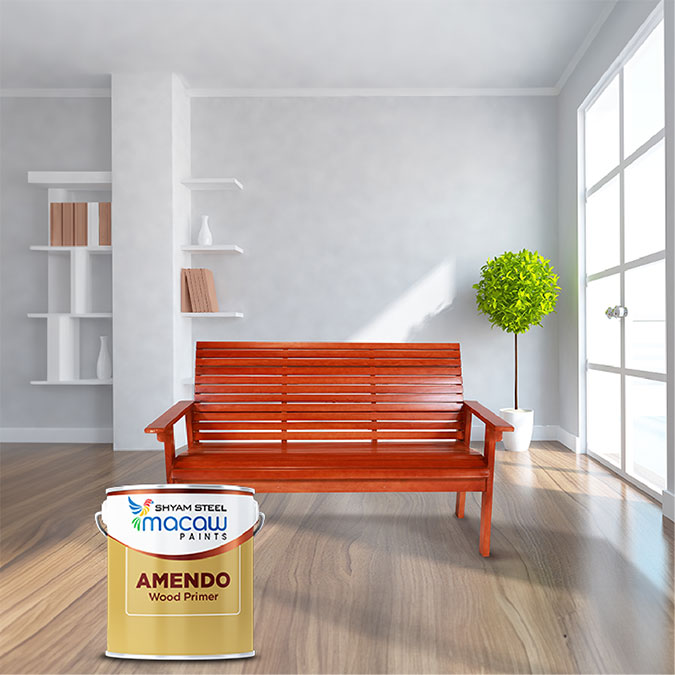
Amendo Wood Primer is designed for wood and its by-products. It offers a resilient and sturdy film, formulated with a special type of synthetic alkyd binder and various additives.
Prior to application of Amendo Wood Primer, ensure the surface is clean and there is no dust
STEP 02
Level the surface with a suitable sandpaper
STEP 03
If required, wipe clean with MTO and ensure the surface is completely dry
STEP 04
Use MTO for dilution up to 10-12% by volume
STEP 05
Before paint application, apply 1-2 coats of Amendo Wood Primer
STEP 06
Leave it to dry for approximately 6-8 hours in normal weather condition before application of subsequent coats
STEP 07
The wood primer can be applied by brush or spray
Product FAQs
Frequently Asked Questions
Wood primer paint exists mainly to deal with one basic fact about timber: it's porous, and raw wood soaks up paint unevenly if nothing seals it first. Amendo Wood Primer handles this with a synthetic alkyd binder and a few additives, forming a film sturdy enough for furniture, doors, and other wooden fixtures without cracking as the wood shifts with humidity. Without this kind of primer paint for wood furniture, the topcoat tends to go on patchy, duller in spots where the wood absorbed more, which is really just the wood doing what porous wood always does. This furniture wood primer also cuts down on moisture getting into the timber itself, which is what causes warping or swelling down the line. Shyam Steel Paints builds this for both indoor and outdoor wood, so it works whether you're refinishing an old cupboard or priming fresh woodwork on a new build.
For furniture specifically, you want a primer built on a flexible binder, since furniture flexes more with humidity and handling than something fixed like a door frame. Amendo Wood Primer uses a synthetic alkyd binder for exactly this reason, giving a resilient film that adapts instead of cracking, while still sealing the wood's pores and giving the topcoat something to properly stick to. Furniture wood primer matters more here than people expect, mainly because furniture gets touched, bumped, and handled far more than static wood fixtures ever do. Before applying it, sand the surface smooth and wipe away the dust; otherwise the primer won't sit right, which sort of defeats the purpose of priming at all. Two coats usually work best on furniture, with enough drying time between them, and what you end up with is a noticeably smoother, longer-lasting base than painting straight onto bare wood ever gives you.
Sealer and primer sound like they do the same job, and they overlap, but they're not quite the same thing. A sealer's main task is locking in the wood's natural moisture and stopping resin or tannin from bleeding through, especially on raw, untreated timber, without necessarily helping paint stick any better. Wood primer paint, Amendo Wood Primer being one example, does that sealing job too, but goes further by creating an adhesive surface meant to help topcoat paint bond properly, which is really the whole point of a primer over a sealer. Sealer usually goes on first for especially resinous or knotty wood, with primer following after. For most standard furniture wood primer jobs on ordinary timber though, a decent alkyd-based primer alone handles both the sealing and the adhesion side of things, making a separate sealer step optional unless you're dealing with unusually sappy wood.
Before painting furniture, reach for a proper wood primer paint rather than whatever wall or metal primer happens to be lying around, since wood absorbs and moves differently and needs something formulated for that specifically. Amendo Wood Primer, built around a synthetic alkyd binder, gives furniture the resilience it needs for regular handling, sealing the wood's pores while creating a surface for the topcoat to grip onto. Sand the furniture smooth first and wipe away the dust, since leftover residue affects how evenly the primer sits, which sort of undoes the point of using one. Depending on porosity, one or two coats usually get applied, with six to eight hours of drying time between them under normal conditions. This prep step matters more than most people expect. A properly primed piece of furniture holds its paint finish for years longer than one painted directly onto bare wood.
Doors and windows deal with more temperature and humidity swings than indoor furniture, so a flexible, durable wood primer paint matters even more here. Amendo Wood Primer's alkyd-based formula handles this reasonably well, forming a film sturdy enough to move with the wood's minor swelling or shrinking without the paint layer above it cracking apart. Since doors and windows get handled constantly and sit at a building's weather-facing entry points, proper prep, sanding and cleaning thoroughly make a real difference to how well the primer holds on. One or two coats with adequate drying time between them sets up a stable base before the topcoat goes on, which is really what determines how long the whole paint job lasts in the end. This furniture wood primer approach works just as well on fresh woodwork as it does on older doors and windows that are already starting to show some wear.