

Rusting is a phenomenon that doesn’t happen overnight. When rust appears, there is always a silent process taking place that begins without being noticed. Rusts are frequently found around a weld or joining area and are frequently overlooked. By the time rust becomes noticeable, it has been slowly eating away at the steel for months and has already become a serious issue. Anti-Rust Primer for metal stops the rusting process at the source, hence choosing the right one is critical.
Causes of Metal Corrosion
Over time, metal, moisture and oxygen react together, and this happens much faster in humid/outdoor environments. Gates, railings and industrial buildings are particularly vulnerable. In many regions of India, corrosion can be noticed within one monsoon season if the metals are exposed and unprotected. This is one of the reasons why anti-rust paint for metal objects should never be overlooked. It is the base coat that all other coats are dependent on.
What Makes a Primer Effective?
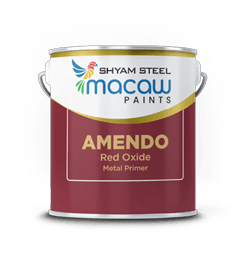
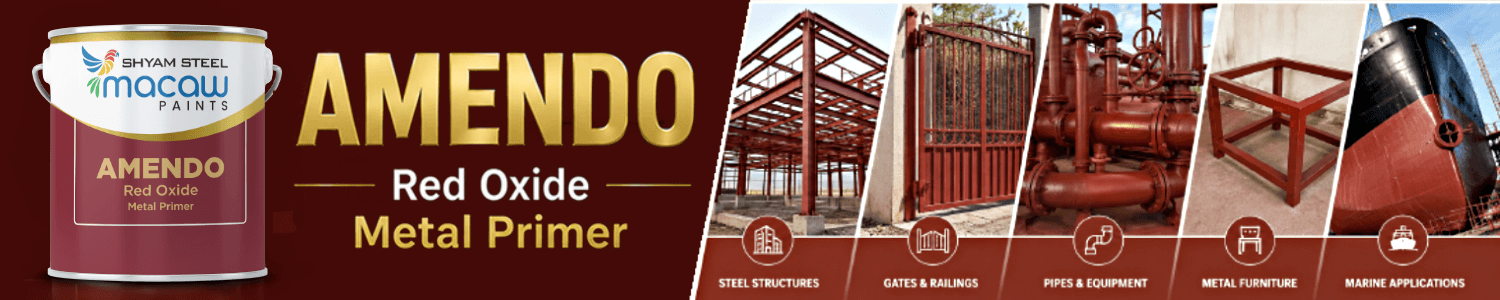
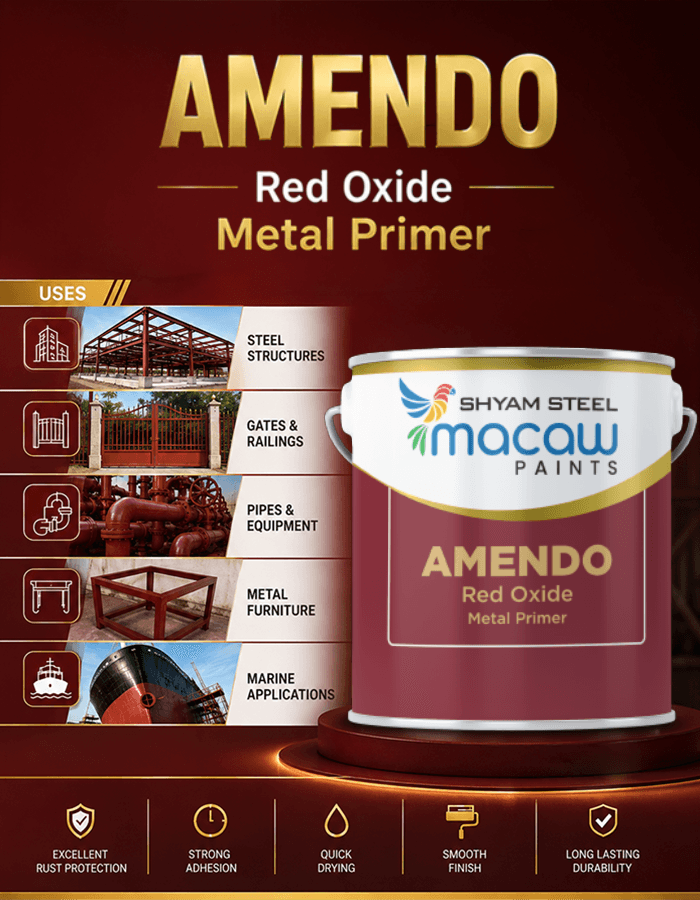
Not all primers are equal, and it becomes obvious within a year or two after application. An effective anti-rust paint will prevent the growth of rust, adhere to the metal surfaces well and provide an appropriate surface for the next layer to stick to properly. This is evident in Amendo Red Oxide Metal Primer. It is solvent-based, specially formulated for ferrous metal and applied before enamel painting. It has a matte finish, a uniform consistency and covers about 90-100 sq.ft. per litre with a single coat at 25 microns dry film thickness. It is recommended that two coats be applied 6-8 hours apart for proper coverage under normal weather conditions.
Drying performance also affects project planning as well. The surface dries to the touch within an hour at a dry film thickness of 18–25 microns, while complete drying can take up to 24 hrs, depending on temperature and humidity. The surface can usually be recoated after 8-10 hours, depending on surface condition and weather.
Matching the Anti-Rust Primer to the Surface
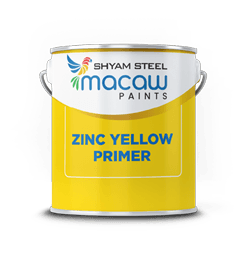
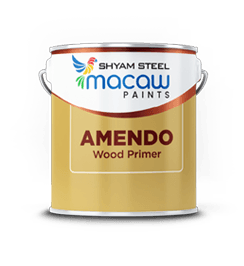
Not all anti-rust primers work on all types of surfaces. And a high-quality top coat will not compensate for the use of a poor-quality primer. Ferrous metal surfaces, like iron gates or steel railings, require Amendo Red Oxide Metal Primer specifically. Wooden surfaces require a different formulation, such as Amendo Wood Primer. It contains a synthetic alkyd binder which is formulated to account for the absorption and expansion qualities of wood. One coat covers approximately 70–80 sq. ft. per litre, with 10–12% thinning. Zinc Yellow Primer is intended for use in factories, infrastructure and similar environments with high corrosion exposure. It is applied before enamel finishes. It's not simply a question of preference; it's a question of what the surface is made of and what it is exposed to.
The Function of Industrial Epoxy Paint on Steel
Not all scenarios can be solved with an anti-rust paint for metal alone, especially in industrial applications. Structural steel exposed to chemical contact, friction or severe environmental exposure must be protected with more than just the primer coat. That's where industrial epoxy paint for steel comes in. Industrial epoxy paint offers a durable, chemically resistant layer that would not be enough to resist harsh conditions in a standard enamel top coat. Macaw Paints' structural coatings are not just for decorating, but are used in a wide range of industries, including infrastructure, manufacturing and road-marking.
Addressing Heat Exposure Separately
Some surfaces are subjected to constant heat and moisture, such as pipelines, machine housings, and equipment located near furnaces or boilers. Normal primers and anti-rust paints for metals will not withstand this type of thermal stress. Over time, it may crack, blister or fall off when exposed to consistently high temperatures. To overcome this problem, heat-resistant paint has been developed to maintain its protective film when exposed to repeated heating and cooling. It is important to check the manufacturer's technical data sheet before painting any surface close to a constant heat source to ensure compliance with the actual temperature tolerance of the product, without assuming that a general-purpose paint will be suitable.
Correct Application Practices
In most cases of primer application, the quality of a surface preparation is a more important factor than the product itself. The surface must be free of any residual rust, as even a small amount left after cleaning can compromise adhesion from the outset. The surface should be completely free from existing rust before applying Amendo Red Oxide Metal Primer. The adhesion will be compromised if any residual rust is left behind. Before dilution, shake and stir the contents thoroughly. Dilute by up to 10–15% by volume, taking care not to over-dilute.
For most projects, two coats, which are applied 6–8 hours apart, are the standard application. It is a flammable liquid, has a flash point greater than 30°C and should be stored in a cool, dry place, away from any source of ignition and with a tightly closed container after use. Smoking around the work area should be strictly avoided, and protective gloves, eye protection and proper ventilation are required during application.
Conclusion
Manufacturing expertise of Shyam Steel since 1953 is extended to the Amendo range of Macaw Paints, such as the Red Oxide Metal Primer, Wood Primer and Zinc Yellow Primer. These products are not just marketed solely based on compliance claims. They are tested at Macaw's own manufacturing and R&D facility in Howrah, West Bengal, in accordance with ISO, GreenPro, ASTM and BIS standards.
Zinc Yellow Primer is formulated to work in industrial settings with high corrosive conditions, and the Amendo line is developed to fill pores and enhance the coating adhesion that comes after. The lead content is below 90ppm, which is standard and safe for all products in the range, not just one product.
Rust prevention determines the long-term durability of any paint system, even though it receives far less attention than the final finish. For both residential and industrial metal surfaces, this is the layer that decides whether a paint job lasts a few years or well over a decade. Check out the full range of primers and protective coatings available on our website.
FAQs
Q. What's the Best Iron Gate and Steel Rail Primer?
Amendo Red Oxide Metal Primer is an appropriate coating for ferrous metal items such as gates and railings, but should not be used on a "one-size-fits-all" basis. It is solvent-based, specially formulated for ferrous metal and is applied before an enamel topcoat. The coverage is approximately 90-100 sq.ft. per litre (at 25 microns DFT), and two coats are suggested for durability.
Q. How Is Industrial Epoxy Paint Different from Normal Primer?
A primer will not stop where structural steel is subject to chemical exposure, friction or extreme weather conditions. Industrial epoxy paint for steel provides a layer of chemically resistant coating specifically designed to withstand such stress. Beyond decorating, Macaw Paints' structural coatings are applied on infrastructure, manufacturing and road-marking applications.
Q. What Is the Number of Coats, and How Many Hours After Application Can They Be Recoated with Amendo Red Oxide Metal Primer?
The typical application of Amendo Red Oxide Metal Primer is in two coats, 6-8 hours apart in normal weather. Surface dry – 1 hour at 18-25 microns dry film thickness; hard dry – up to 24 hours depending on humidity; surface ready for recoating is 8-10 hours.
Q. Can Ordinary Primer or Anti-Rust Paint Be Used on High Heat Surfaces?
Not automatically. Resistant to repeated heating and cooling cycles, heat-resistant paint can be used on pipelines, machine housings, and equipment near furnaces or boilers where ordinary primers or enamels crack and blister. Before application, always consult the technical data sheet, as the actual temperature tolerance of the product does not necessarily correspond to the manufacturing standards of the Amendo range.